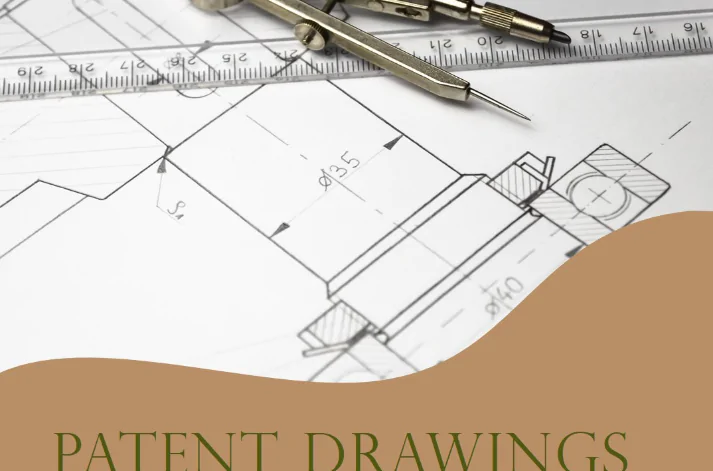
Embarking on the journey of securing intellectual property rights for your inventions involves navigating intricate requirements, with patent illustrations playing a pivotal role in the process. At The Patent Drawing Services, we understand the significance of mastering patent drawings to effectively communicate the essence of your invention. This guide on Navigating Patent Illustrations will help you explore the essential aspects of patent drawings, their requirements, and how to choose between design and utility patent drawings ensuring your application stands strong before patent offices worldwide, including the United States Patent and Trademark Office.
Understanding the Role of Patent Illustrations
Before diving deeper into Navigating Patent Illustratsion, it is crucial to understand why patent drawings matter. Patent illustrations are not just optional visuals—they are often a critical component of a successful patent application.
They serve as visual representations that complement the written specification, helping patent examiners and stakeholders interpret the invention more clearly. In many cases, drawings can convey technical details that words alone may fail to describe accurately. This clarity can significantly reduce the chances of objections or rejections during examination.
High-quality patent drawings:
- Enhance understanding of complex inventions
- Improve the overall quality of the application
- Help define the scope of protection
- Reduce ambiguity in claims
Simply put, mastering Navigating Patent Illustrations can be the difference between a smooth approval process and repeated office actions.
Types of Patent Applications and Corresponding Drawing Requirements
A key part of Navigating Patent Illustrations is understanding that different patent applications come with different drawing standards. Let’s break down the requirements across major application types:
Provisional Patent Applications
Provisional applications are often the first step for inventors. They provide a “patent pending” status and allow time for further development.
While drawings are not strictly mandatory, including them is highly recommended. Well-prepared illustrations:
- Strengthen your disclosure
- Provide better clarity of invention
- Establish a stronger priority date
When creating drawings for provisional filings, ensure they clearly depict all critical components and variations of your invention.
PCT International Applications
Under the Patent Cooperation Treaty (PCT), inventors can seek protection in multiple countries through a single application. However, Navigating Patent Illustrations becomes more complex here due to varying international standards.
Each jurisdiction may have slightly different requirements regarding:
- Line thickness
- Margins and page size
- Reference numerals
- Shading and surface indication
Failure to comply with these can result in formal objections, delaying your application. Therefore, precision and adherence to global standards are essential.
PCT National Phase Applications
After the international phase, applicants enter the national phase in specific countries. At this stage, patent offices may impose stricter or modified drawing requirements.
For example:
- Some offices may require redrawing based on local standards
- Certain formatting elements may need adjustment
- Language-specific labeling may be necessary
This stage highlights why Navigating Patent Illustrations requires not just technical skill but also regulatory awareness.
Design Patent vs Utility Patent Drawings: What Should You Choose?
An important addition to Navigating Patent Illustrations is understanding whether your invention requires design patent drawings or utility patent drawings.
Utility Patent Drawings
Utility patents protect how an invention works. These drawings focus on:
- Structure
- Functionality
- Components and relationships
They often include:
- Multiple views (top, side, sectional)
- Flowcharts or diagrams (for processes)
- Reference numbers linked to descriptions
Utility drawings must be highly detailed and precise, as they directly support patent claims.
Design Patent Drawings
Design patents protect the appearance of an invention rather than its function.
These drawings emphasize:
- Shape
- Surface ornamentation
- Aesthetic design
They typically require:
- Consistent shading
- Multiple perspectives
- High visual clarity
Even minor inconsistencies can lead to rejection, making professional expertise essential.
Choosing the Right Type
When Navigating Patent Illustrations, ask yourself:
- Does your invention focus on functionality? → Utility patent
- Does it focus on appearance? → Design patent
In some cases, both protections may be beneficial.
Key Guidelines from Patent Offices
Patent offices like the United States Patent and Trademark Office have strict rules governing patent drawings. Understanding these is essential for compliance.
Common requirements include:
- Black and white line drawings (color only when necessary)
- Proper margins and page size
- Clear and consistent numbering
- No unnecessary text inside drawings
- Professional line quality without smudges or irregularities
Failure to meet these standards can result in objections or requests for correction.
Best Practices for Navigating Patent Drawing Requirements
Mastering Navigating Patent Illustrations involves following proven best practices:
1. Understand Jurisdiction-Specific Rules
Always review the guidelines of the patent office where you are filing. Each office may have unique requirements.
2. Work with Professionals
Experienced patent illustrators understand technical and legal standards, ensuring your drawings meet global compliance.
3. Focus on Clarity and Accuracy
Every line, label, and figure should serve a purpose. Avoid unnecessary complexity while ensuring completeness.
4. Review Before Submission
Carefully check for:
- Missing views
- Incorrect numbering
- Formatting errors
A small mistake can lead to costly delays.
5. Stay Consistent
Consistency in style, scale, and labeling across all drawings is critical.
Common Mistakes to Avoid
Even experienced inventors can struggle with Navigating Patent Illustrations. Here are common pitfalls:
- Using low-quality or pixelated images
- Inconsistent reference numerals
- Missing essential views
- Overuse of shading in utility drawings
- Ignoring patent office formatting rules
Avoiding these mistakes can significantly improve your chances of approval.
Why Professional Patent Drawing Services Matter
Creating patent drawings is not just a technical task it is a strategic one. Professional services ensure:
- Compliance with global standards
- Faster processing and fewer objections
- High-quality, publication-ready illustrations
- Better communication of your invention
At The Patent Drawing Services, we specialize in delivering precise, compliant, and high-quality drawings tailored to your patent needs.
Conclusion
In conclusion, Navigating Patent Illustrations is a crucial step in securing strong intellectual property protection. Whether you are filing a provisional application, a PCT international application, or entering the national phase, understanding drawing requirements is essential.
Choosing between design and utility patent drawings, complying with guidelines from authorities like the United States Patent and Trademark Office, and following best practices can significantly impact the success of your application.