
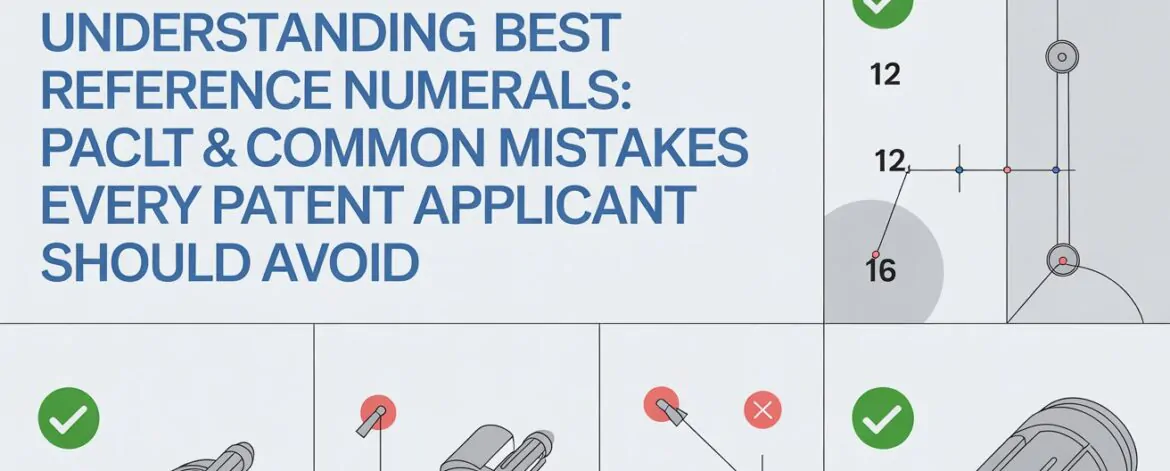
In patent drafting, clarity is not optional—it is a legal requirement. Among the most overlooked yet critical elements of patent applications is the proper use of Reference Numerals. While these may appear as simple numbers pointing to drawing elements, they serve as the backbone of how examiners, attorneys, and the public understand and interpret an invention.
Incorrect or inconsistent Reference Numeral can lead to examiner objections, delayed prosecution, increased costs, and even weakened patent protection. This comprehensive guide explores the best practices, common mistakes, reuse rules, and how numbering errors trigger examiner objections across major patent offices such as the USPTO, EPO, and WIPO.
For professional preparation of your patent drawings, including Utility, Design, and Trademark drawings, you can rely on The Patent Drawing Services.
What Are Reference Numerals and Why They Matter
Reference Numerals are numerical identifiers used in both patent drawings and written specifications to clearly denote individual components, features, or elements of an invention. They create a direct link between drawings and the specification, allowing patent examiners and readers to quickly and accurately interpret the invention.
As stated by the USPTO (USPTO Drawing Requirements), drawings must clearly show each element referenced in the claims, and those elements must be consistently identified using Reference Numerals.
Key points to remember:
- Drawings without proper Reference Numerals may lack clarity.
- Specifications without matching numerals confuse examiners.
- Inconsistencies often result in office actions.
Reference Numerals are thus essential for successful patent prosecution and can directly influence the enforceability of your patent.
Sequential Numbering Logic: The Foundation of Proper Reference Numeral
What Is Sequential Numbering?
Sequential numbering is a best practice that ensures readability and consistency in your patent drawings. It involves:
- Starting with a base number (e.g., 1, 10, 100)
- Assigning numbers logically as new elements are introduced
- Avoiding random or scattered numbering
Example of structured sequential numbering:
- 100 – Main device
- 110 – Housing
- 120 – Control unit
- 121 – Control button
This system improves comprehension for examiners and aligns with expectations from both the USPTO and the EPO (EPO Drawing Guidelines).
Why Poor Numbering Logic Causes Problems
Random or inconsistent numbering can create confusion, requiring examiners to manually track elements across drawings and the specification. This often leads to objections under clarity and definiteness requirements. Even technically strong inventions can face delays if Reference Numerals are poorly organized.
Reuse Rules: When and How Reference Numerals Can Be Reused
Understanding when reuse is allowed and when it is prohibited is crucial.
When Reuse Is Allowed
Reference Numeral may be reused under the following circumstances:
- The same element appears in multiple views
- The element is shown from different perspectives
- A repeated part in an assembly
For instance, a screw labeled 130 in one figure should retain the same number in all other relevant figures.
When Reuse Is Not Allowed
Reuse becomes problematic when:
- A numeral is assigned to different elements
- Similar-looking but functionally distinct parts share a number
- New elements are added without new numerals
The WIPO guidelines (WIPO PCT Drawing Requirements) clearly state that each Reference Numeral must correspond to one and only one element throughout the application.
Matching Reference Numerals with the Specification
A frequent mistake is a mismatch between drawings and the written specification. To maintain clarity and avoid objections:
Best Practices
- Every numeral in the drawings should appear in the specification.
- Each numeral must be described consistently and clearly.
- Every numeral in the specification must appear in the drawings.
Failing to maintain this one-to-one relationship is a common cause of objections under enablement and clarity requirements.
How Mismatched Numerals Trigger Examiner Objections
Examiners rely heavily on Reference Numeral to verify:
- Claim support
- Structural relationships
- Functional explanations
Common objections include:
- “Element not shown in drawings”
- “Inconsistent reference numerals”
- “Unclear relationship between components”
These issues slow prosecution and may require costly amendments. Proper use of Reference Numerals also strengthens your patent during enforcement and licensing.
Reference Numeral Across Different Patent Offices
Although rules vary slightly, the requirements for Reference Numeral are largely consistent across major jurisdictions.
USPTO
- Clear labeling of all claimed elements
- Consistent numbering throughout the application
- Non-compliance can result in drawing objections (USPTO)
EPO
- Emphasizes clean, readable drawings
- Requires logical numbering schemes
- Missing or duplicated numerals lead to objections (EPO)
WIPO (PCT Applications)
- Numerals must remain consistent across all figures
- Errors can create issues during national phase entries (WIPO)
Global consistency reinforces the need to master Reference Numerals early in the drafting process.
Common Mistakes Inventors Make
Despite their importance, Reference Numeral are often treated casually. Common errors include:
- Skipping numbers without explanation
- Using different numerals for the same part
- Reusing numerals for different elements
- Changing numbering mid-drafting
- Forgetting to update numerals after revisions
Each of these mistakes increases the likelihood of examiner objections and delays.
Best Practices Checklist for Reference Numerals
To avoid problems, follow these guidelines:
- Use a logical sequential numbering system
- Assign one numeral per unique element
- Reuse numerals only for identical elements
- Ensure drawings and specification match exactly
- Double-check numbering after every revision
- Keep numerals readable and uncluttered
Implementing these practices significantly reduces examiner objections and improves patent application quality.
Why Reference Numeral Matter More Than You Think
For patent examiners, Reference Numeral are not cosmetic—they are functional tools. Poor numbering signals careless drafting, potential claim interpretation issues, and lack of clarity. In contrast, clean, consistent Reference Numerals:
- Improve examiner efficiency
- Strengthen claim support
- Reduce prosecution timelines
In competitive patent landscapes, even minor drafting errors can have substantial consequences.
Leveraging Professional Drawing Services
Investing in professional patent drawing services ensures that Reference Numeral are applied consistently and correctly. At The Patent Drawing Services, inventors and startups can access:
- Utility Patent Drawing Services – for functional schematics, system diagrams, and workflows
- Design Patent Drawing Services – for ornamental and UI-focused designs
- Trademark Drawing Services – for logos, icons, and brand elements
Professional preparation ensures compliance with USPTO, EPO, and WIPO standards, reduces examiner objections, and enhances patent enforceability. Accurate drawings with correct Reference Numerals are not just a filing requirement—they are a strategic asset for intellectual property protection.
Final Thoughts
Mastering Reference Numeral is essential for anyone involved in patent drafting. From sequential numbering logic to reuse rules and specification alignment, proper application of numerals significantly impacts patent quality, enforceability, and prosecution efficiency.
For inventors, startups, and patent professionals, investing in professional drawings and meticulous Reference Numerals can prevent examiner objections, reduce costs, and strengthen IP protection across jurisdictions.