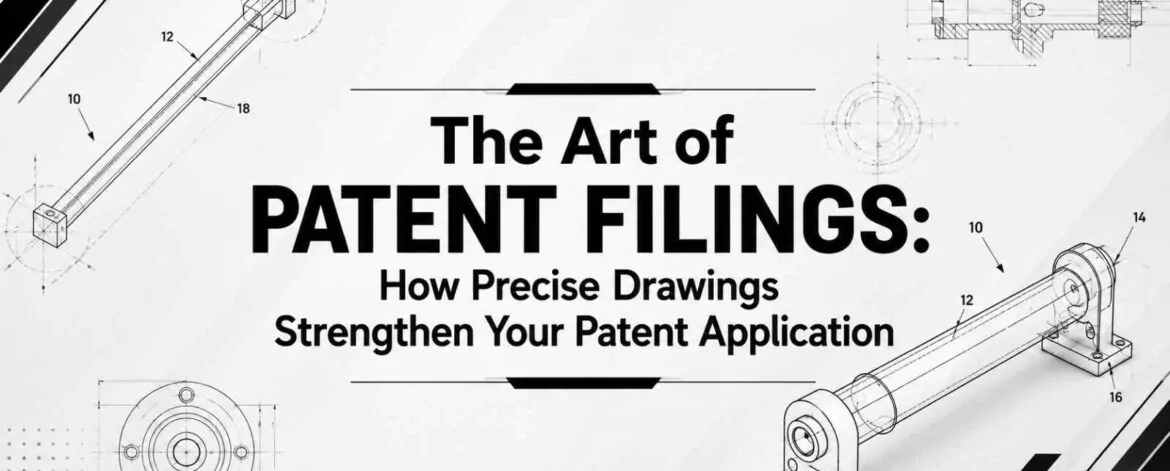
The Art of Patent Filings is more than completing forms and submitting technical documents. A successful patent filing requires a clear understanding of the invention, accurate technical communication, careful documentation, and attention to the requirements of the relevant patent office. For inventors, attorneys, and businesses preparing a U.S. patent application, professional patent drawings can play an important role in communicating how an invention works and what it looks like.
A patent application combines written descriptions, claims, drawings, and other required information. Each part needs to support the overall disclosure. When the invention can be understood more clearly through illustrations, properly prepared drawings can make complex structures, components, relationships, and processes easier to understand.
Understanding the Art of Patent Filings
The Art of Patent Filings begins with understanding that a patent application is a technical document, not simply a formality. The information submitted should present the invention clearly and consistently.
For utility patents, drawings may be necessary when they help explain the subject matter of the invention. The USPTO states that a drawing should show every feature of the invention specified in the claims when a drawing is required. The drawings must also follow specific standards covering aspects such as views, margins, numbering, line quality, and shading.
This means an inventor’s rough sketch may communicate an idea to a colleague but may not be suitable for a patent application. A professional patent draftsman transforms that concept into a structured technical illustration while preserving the important features of the invention.
Why Patent Drawings Matter in a Filing
One of the most important parts of the Art of Patent Filings is knowing when visual information can communicate something more effectively than words.
A well-prepared patent drawing can illustrate:
- Components and their relationships
- Internal structures
- Exploded views
- Cross-sectional views
- Different orientations of an invention
- Mechanical assemblies
- Electrical or technical systems
- Process or flow diagrams
- Distinctive features of a design
The goal is not to make the drawing decorative. The goal is to make the technical disclosure understandable and consistent with the written application.
For design patents, visual disclosure is particularly important. The USPTO describes the drawing or photograph as a critical part of the design application because it establishes the appearance of the claimed design. The disclosure should be clear and complete enough that the design does not have to be guessed by the viewer.
Precision Is at the Heart of Patent Filing
The Art of Patent Filings requires precision at every stage. Small inconsistencies in drawings can create unnecessary problems during prosecution.
Reference numerals, line weights, views, labels, shading, margins, and figure arrangements should be handled carefully. The USPTO requires drawings to have satisfactory reproduction characteristics, with lines, numbers, and letters that are clean, sufficiently dark, uniform, and well-defined.
A professional drawing service can help ensure that these technical details are considered before the drawings are delivered for filing.
This is especially useful when an invention contains many components. An experienced draftsman can organize the figures so that each view communicates useful information without creating unnecessary visual clutter.
From Inventor Sketch to Professional Patent Drawing
Many inventors begin with a hand sketch, CAD model, photograph, or concept drawing. These materials can be useful starting points, but they often require professional refinement before being used in a patent application.
The Art of Patent Filings involves turning an initial concept into a formal technical disclosure.
A professional patent drawing workflow may include reviewing the inventor’s materials, identifying important components, selecting appropriate views, preparing the figures, adding reference numerals, checking line quality, and reviewing the final drawings against applicable filing requirements.
The Patent Drawing Services works with materials such as hand sketches, CAD files, and rough inventor concepts and prepares utility, design, and other patent-related drawings for clients. The company’s current website also highlights experience working with law firms, patent agents, corporations, and complex technical inventions.
USPTO Requirements Should Guide the Process
A major part of the Art of Patent Filings is understanding that patent drawings are not ordinary technical illustrations.
For U.S. utility applications, the USPTO normally requires black-and-white drawings, with specific requirements for sheet dimensions and margins. For example, the USPTO’s utility application guidance specifies different minimum margins for standard letter-size drawing sheets and A4 sheets.
The drawings should also contain enough views to properly disclose the invention. The MPEP explains that the drawing must contain as many views as necessary to show the invention, with one view potentially being suitable for use as the front-page illustration.
Following these requirements from the beginning can reduce avoidable corrections and improve the overall quality of the application package.
Utility and Design Applications Require Different Approaches
The Art of Patent Filings also means understanding the difference between utility and design patent disclosures.
Utility patent drawings generally focus on the structure, function, operation, or technical features of an invention. Depending on the invention, figures may include perspective views, sectional views, exploded views, detailed views, or diagrams.
Design patent drawings focus on the ornamental appearance of the claimed product. Because the visual disclosure defines the appearance being protected, consistency between the figures is especially important. The USPTO requires sufficient views to provide a complete disclosure of the claimed design.
Choosing the appropriate drawing approach is therefore an important part of preparing a strong application.
Avoiding Common Patent Drawing Problems
Another important element of the Art of Patent Filings is identifying potential drawing problems before submission.
Common issues can include unclear figures, inconsistent reference numerals, inadequate views, incorrect margins, poor line quality, unnecessary shading, crowded illustrations, and drawings that do not properly correspond with the written disclosure.
Photographs are also not ordinarily accepted in utility and design applications unless they are the only practical medium for illustrating the invention, subject to USPTO requirements.
A pre-filing quality review can therefore be valuable. Instead of discovering a problem after submission, applicants can identify inconsistencies while the drawings are still being prepared.
The Role of Professional Patent Drawing Services
Professional drafting support can make the Art of Patent Filings more efficient for inventors and patent professionals who do not want to spend valuable time creating or correcting technical figures.
A specialized patent drawing provider understands that the objective is not simply to produce attractive illustrations. The drawings need to communicate technical information clearly while following applicable patent office standards.
The Patent Drawing Services provides utility patent drawings, design patent drawings, and trademark drawings, with services intended for law firms, corporations, patent attorneys, and patent agents. Its website states that its drawings are prepared with USPTO requirements in mind and that it also supports work aligned with PCT and EPO guidelines for international applications.
Building a Better Filing Strategy
The Art of Patent Filings is ultimately about combining accuracy, clarity, consistency, and preparation.
Before submitting a patent application, inventors and attorneys should review whether the drawings adequately represent the invention, whether the figures correspond with the written description, whether important features are visible, and whether the drawings satisfy the applicable formatting requirements.
A strong workflow can begin with the invention disclosure, followed by selection of appropriate views, professional drafting, internal review, and final quality checking.
This approach is particularly valuable for complex inventions where a single figure may not be sufficient to explain the complete structure or operation.
Final Thoughts
The Art of Patent Filings is a combination of technical knowledge, careful documentation, and strategic preparation. Patent drawings are an important part of that process whenever visual disclosure is necessary to understand the invention or establish the appearance of a claimed design.
Professional patent drawings can help transform rough concepts into clear, organized figures that are easier to review and prepare for filing. By paying attention to USPTO requirements, maintaining consistency between drawings and written disclosures, and reviewing figures before submission, inventors and patent professionals can create a more reliable patent application package.
For inventors, attorneys, patent agents, and businesses looking for professional support, The Patent Drawing Services provides specialized patent drawing services designed to support the filing process with accurate and professionally prepared technical illustrations.