Innovation in digital design has moved far beyond traditional screens. From immersive virtual reality environments to interactive augmented overlays, today’s user experiences are dynamic, spatial, and constantly evolving. Recognizing this shift, the United States Patent and Trademark Office (USPTO) has introduced a long-awaited update that redefines how digital designs are protected.
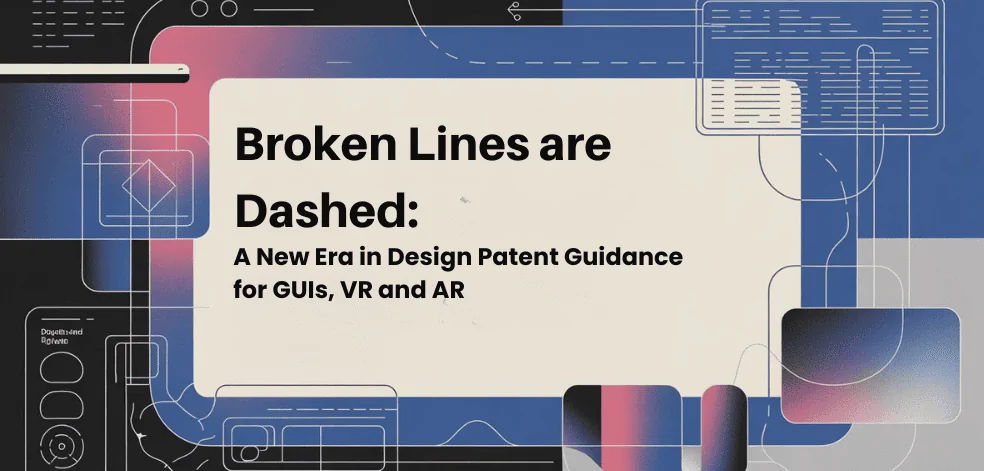
This transformation is best captured by the phrase “Broken Lines are Dashed.” It represents a significant modernization in how design patents are approached—especially under the new Design Patent Guidance for GUIs, VR and AR.
For designers, developers, and businesses, this change opens up new possibilities—but it also requires a deeper understanding of updated filing strategies. With expert support from The Patent Drawing Services, applicants can navigate this transition effectively and secure strong protection for their innovations.
Understanding the Traditional Approach
To appreciate the importance of this update, it helps to understand how things worked before.
Previously, when filing a design patent for a graphical user interface (GUI), applicants were required to show the design applied to a physical object—typically a screen or display. Even if the innovation existed purely in software, it had to be visually tied to hardware using broken (dashed) lines.
This approach created unnecessary complications:
- Digital designs were forced into physical contexts
- Drawings became cluttered with irrelevant elements
- The real innovation—the interface—was often overshadowed
- Emerging technologies like AR and VR were difficult to represent
In short, the system did not reflect how modern digital products actually function.
What “Broken Lines are Dashed” Really Means
The USPTO’s updated guidance removes the strict requirement to include a display device in design patent drawings. This is the core idea behind “Broken Lines are Dashed.”
Now, applicants have more freedom:
- A GUI no longer needs to be shown on a screen
- Broken lines are optional, not mandatory
- The design itself becomes the primary focus
This shift allows inventors to present their work more clearly and accurately. Instead of working around outdated rules, applicants can now highlight the true essence of their innovation.
Why This Update Matters Today
The timing of this change is no coincidence. Technology has evolved rapidly, and the way users interact with digital systems has fundamentally changed.
Modern interfaces are no longer limited to flat screens. Instead, they exist in:
- Three-dimensional environments
- Wearable devices
- Mixed reality systems
- Gesture-controlled spaces
The updated Design Patent Guidance for GUIs, VR and AR acknowledges these realities. It allows protection for designs that exist beyond traditional hardware, making the patent system more relevant to current innovation trends.
A Breakthrough for VR and AR Technologies
One of the most important outcomes of this update is its impact on immersive technologies.
In the past, protecting designs in virtual reality or augmented reality environments was challenging because there was no clear “display screen” to show. The old rules didn’t easily accommodate designs that existed in open space.
Now, things have changed.
Designers working in VR and AR can:
- Protect spatial interfaces
- Claim interactive digital environments
- Represent floating or projected elements without artificial constraints
This is a major step forward for industries like gaming, healthcare, education, and retail, where immersive technology is becoming increasingly important.
The Continued Relevance of Broken Lines
Although the phrase suggests a shift away from broken lines, they are still part of the design patent system.
Broken (dashed) lines continue to serve useful purposes, such as:
- Indicating portions of a design that are not being claimed
- Providing context for how a design is used
- Separating key elements from surrounding features
The main distinction is that broken lines are no longer necessary but rather an option. Designers can decide when and how to use them based on what best represents their invention.
Benefits for Innovators and Businesses
The updated Design Patent Guidance for GUIs, VR and AR offers several practical advantages:
Clearer Representation
Designs can now be presented without unnecessary distractions, making them easier to understand.
Greater Flexibility
Applicants are no longer restricted by rigid drawing rules, allowing more creative freedom.
Broader Protection
By removing device-specific limitations, patents can cover a wider range of applications.
Alignment with Modern Technology
The system now reflects how digital products are actually designed and used.
Why Expert Assistance Is More Vital Than Ever
While the new rules simplify some aspects of the process, they also introduce new challenges.
Without proper guidance, applicants may:
- Use incorrect terminology in claims
- Misrepresent the scope of their design
- Submit drawings that do not fully support their application
This is where The Patent Drawing Services provides significant value.
Key Advantages of The Patent Drawing Services:
- Expertise in USPTO-compliant drawings
- Deep understanding of GUI, VR, and AR design requirements
- Strategic use of broken and solid lines
- Accurate alignment between drawings and claims
- Reduced risk of office actions and rejections
With the updated framework, precision matters more than ever—and professional support ensures nothing is overlooked.
A Step Toward Global Alignment
Another important aspect of this update is its global impact.
Many international patent systems have already adopted more flexible approaches to digital design protection. By updating its guidelines, the USPTO is moving closer to international standards.
This makes it easier for businesses operating globally to maintain consistent intellectual property strategies across different markets.
Remaining Considerations
Despite the improvements, applicants should still be aware of certain requirements:
- Designs must be tied to a valid article of manufacture
- Abstract or purely conceptual designs are not eligible
- Claims and drawings must work together to define the invention
Understanding these nuances is essential for building a strong and enforceable patent.
Looking Ahead: The Future of Design Protection
The phrase “Broken Lines are Dashed” symbolizes more than just a procedural update—it reflects a broader shift in how design is understood.
As technology continues to evolve, we can expect further developments in areas such as:
- Artificial intelligence interfaces
- Holographic displays
- Spatial computing systems
- Fully immersive digital environments
The updated Design Patent Guidance for GUIs, VR and AR lays the foundation for these future innovations, ensuring that the patent system remains relevant and effective.
Conclusion
The USPTO’s modernization of design patent guidance marks a turning point for digital innovation. By removing outdated requirements and embracing new technologies, the system now better supports the way designers actually create and users actually interact.
The idea that Broken Lines are Dashed highlights a move toward flexibility, clarity, and innovation-friendly practices. It allows designers to focus on what truly matters their creative work without unnecessary constraints.
However, with greater flexibility comes the need for greater precision. Successfully navigating the updated Design Patent Guidance for GUIs, VR and AR requires a careful balance of visual accuracy and strategic wording.
That’s why partnering with experts like The Patent Drawing Services is a smart investment. With the right guidance, businesses can protect their designs effectively and stay ahead in an increasingly competitive digital landscape.
The future of design patents is no longer confined to physical screens it exists in every digital interaction, every virtual space, and every augmented experience we create.