When filing a design patent application, every detail in your drawings matters. Unlike utility patents, which protect how an invention works, design patents protect how a product looks. That means the drawings become the foundation of your patent application. One of the most important yet often misunderstood elements is the use of Broken Lines in Design Patent Drawings.
Many inventors believe broken lines are only a drafting style, but they actually define the scope of your legal protection. A small mistake in using broken lines can lead to unnecessary Office Actions, delays, or a design patent that protects either too much or too little. Understanding the USPTO Rules for Broken Lines in Design Patent Drawings helps applicants present their inventions clearly and accurately.
At The Patent Drawing Service, we create professional patent illustrations that comply with USPTO standards and international filing requirements. Whether you need Design Patent Drawings, Utility Patent Drawings, or Trademark Drawings, our experienced illustrators ensure your application includes precise, high-quality drawings that support successful patent filings.
What Are Broken Lines in Design Patent Drawings?
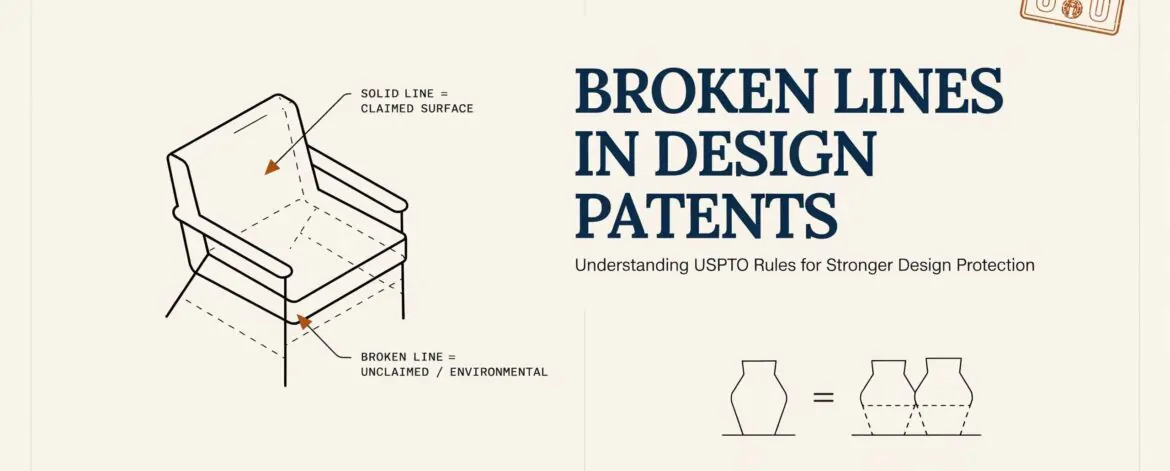
Broken Lines in Design Patent Drawings are dashed lines used to illustrate portions of an article that are not claimed as part of the design. In contrast, solid lines identify the ornamental features that the applicant wants to protect.
For example, imagine you have designed a unique handle for a coffee mug. If the handle is the only feature you want to claim, it is shown using solid lines, while the rest of the mug appears in broken lines. This tells the USPTO examiner that only the handle is part of the protected design.
Using Broken Lines in Design Patent Drawings correctly gives examiners a clear understanding of your invention while preventing confusion about the boundaries of the claimed design.
Why Broken Lines Are Important
The correct use of Broken Lines in Design Patent Drawings is about much more than appearance. These lines define what your design patent actually protects.
Some key advantages include:
- Clearly identifying the claimed ornamental features.
- Excluding portions that are functional or already known.
- Allowing applicants to protect only the innovative part of a product.
- Reducing ambiguity during examination.
- Supporting stronger patent enforcement in the future.
When prepared correctly, Broken Lines in Design Patent Drawings help establish a well-defined design claim and improve the overall quality of the patent application.
USPTO Rules for Broken Lines in Design Patent Drawings
The United States Patent and Trademark Office has clear guidelines regarding Broken Lines in Design Patent Drawings. Applicants who understand these requirements are less likely to receive drawing-related objections.
Broken Lines Are Not Part of the Claimed Design
The most important rule is that broken lines indicate features that are excluded from the claimed design. Only the portions shown in solid lines receive legal protection.
Maintain Consistency Across Every Figure
If a feature is illustrated in broken lines in one drawing, it should generally remain broken in every related view. Inconsistent line styles may create uncertainty about the scope of the design.
Use Broken Lines to Show Environmental Structure
Broken lines often represent surrounding objects that provide context. These elements help identify the article without becoming part of the claimed design.
Clearly Define Boundaries
Broken lines can also separate claimed portions from unclaimed portions of the same article. These boundaries should be easy to understand and consistently represented throughout the drawings.
Produce Clear and Readable Drawings
Broken lines should never overpower the claimed design. The drawings must remain clean, accurate, and easy for examiners to interpret.
Following these USPTO requirements helps applicants submit Broken Lines in Design Patent Drawings that meet examination standards and reduce the likelihood of corrections or delays.
Solid Lines vs. Broken Lines
Understanding the difference between solid and broken lines is essential when preparing design patent illustrations.
Solid Lines
- Represent the claimed ornamental design.
- Define the scope of patent protection.
- Receive legal protection after the patent is granted.
Broken Lines
- Represent unclaimed portions.
- Provide context or identify the article.
- Do not receive patent protection.
- Help define partial designs.
Choosing between solid and broken lines is a strategic decision that directly affects the value of your design patent.
Common Uses of Broken Lines in Design Patent Drawings
There are several situations where Broken Lines in Design Patent Drawings are commonly used.
Showing the Rest of the Product
An inventor may wish to protect only one decorative feature instead of the entire product. Broken lines illustrate the remaining portions without including them in the claim.
For example:
- Decorative bottle labels
- Smartphone bezels
- Chair armrests
- Vehicle grilles
Excluding Functional Features
Some components exist purely for functional purposes rather than appearance. Since design patents protect ornamental features, these functional elements are often illustrated with broken lines.
Examples include:
- Hinges
- Fasteners
- Mounting brackets
- Mechanical connectors
Protecting Partial Designs
The USPTO allows applicants to claim only part of a product. This flexibility enables inventors to protect unique visual elements while excluding standard portions of the article.
Properly prepared Broken Lines in Design Patent Drawings make partial design protection possible.
Common Mistakes to Avoid
Many design patent applications encounter problems because the drawings do not correctly use broken lines.
Mixing Line Types
Changing a feature from solid lines in one figure to broken lines in another creates uncertainty and may trigger an Office Action.
Claiming Too Many Features
Showing every part of a product in solid lines may unnecessarily limit future protection. Applicants should claim only the features they truly wish to protect.
Poor Drawing Quality
Low-resolution illustrations, uneven line spacing, and unclear boundaries make drawings difficult to interpret and may delay examination.
Inconsistent Views
Every figure should accurately represent the same claimed design. Missing or inconsistent views often require revisions.
Incorrect Broken Line Placement
Broken lines should provide context without obscuring the claimed design. Poor placement may reduce the clarity of the application.
Avoiding these mistakes improves the effectiveness of Broken Lines in Design Patent Drawings and creates a stronger patent application.
Best Practices for USPTO-Compliant Design Patent Drawings
Professional patent illustrators follow established practices to prepare drawings that satisfy USPTO requirements.
Plan the Scope Before Drafting
Determine which ornamental features deserve protection before beginning the illustrations. This decision guides where broken lines should appear.
Keep Drawings Consistent
Every drawing view should use identical line styles for the same features.
Use Proper Line Quality
Broken lines should remain lighter in appearance while still being clearly visible. Clean drafting helps examiners quickly distinguish claimed and unclaimed portions.
Include Complete Drawing Views
Most design patent applications require front, rear, top, bottom, left, right, and perspective views unless certain views are identical or unnecessary.
Review Before Filing
Carefully inspect every figure for consistency, accuracy, and compliance before submitting the application.
These practices help create Broken Lines in Design Patent Drawings that clearly communicate the intended design and reduce examination issues.
Why Professional Patent Drawings Matter
Patent drawings are not simply illustrations they are legal documents that define the scope of protection. Even a minor drafting error can affect the outcome of a design patent application.
Professional illustrators understand:
- USPTO drawing requirements
- Design patent examination standards
- Proper use of broken and solid lines
- Figure consistency
- Line quality
- International filing requirements
At The Patent Drawing Service, our team prepares accurate, publication-ready patent illustrations that comply with USPTO standards while supporting successful filings in other jurisdictions.
For inventors planning international protection, official guidance is also available through the USPTO, EPO (European Patent Office), and WIPO (World Intellectual Property Organization). Reviewing these resources helps applicants understand filing requirements across different patent systems.
Why Choose The Patent Drawing Service?
Preparing Broken Lines in Design Patent Drawings requires technical knowledge, drafting precision, and a thorough understanding of patent office standards. At The Patent Drawing Service, we combine years of illustration experience with attention to detail to deliver drawings that meet professional and legal expectations.
Our services include:
- Design Patent Drawings prepared according to USPTO guidelines.
- Utility Patent Drawings with accurate technical illustrations.
- Trademark Drawings for clear and compliant trademark applications.
- Fast turnaround times.
- Affordable pricing.
- Multiple quality checks before delivery.
- Support for both U.S. and international patent filings.
- Confidential handling of every client project.
Whether you are an independent inventor, a startup, or a patent law firm, our illustration specialists work closely with you to produce drawings that accurately represent your innovation.
Conclusion
Understanding Broken Lines in Design Patent Drawings is essential for anyone seeking design patent protection. These seemingly simple dashed lines play a critical role in defining what is claimed, what is excluded, and how your invention will be interpreted during examination. By following USPTO rules and maintaining consistency throughout every drawing, applicants can strengthen their patent applications and reduce unnecessary delays.
Professional patent drawings also improve clarity, support stronger legal protection, and help examiners evaluate applications more efficiently. Instead of risking costly revisions, it is worth investing in illustrations prepared by experienced professionals who understand patent drawing requirements.
At The Patent Drawing Service, we are committed to helping inventors and businesses protect their innovations through accurate Design Patent Drawings, Utility Patent Drawings, and Trademark Drawings. Our team delivers high-quality illustrations that meet USPTO standards and support successful intellectual property filings around the world.
Ready to submit professional patent drawings with confidence? The Patent Drawing Service provides expert Design Patent Drawings, Utility Patent Drawings, and Trademark Drawings tailored to USPTO requirements. Contact our team today and let our experienced illustrators prepare accurate, compliant drawings that help protect your innovation and move your patent application forward.